
- English
- Español
- Português
- русский
- Français
- 日本語
- Deutsch
- tiếng Việt
- Italiano
- Nederlands
- ภาษาไทย
- Polski
- 한국어
- Svenska
- magyar
- Malay
- বাংলা ভাষার
- Dansk
- Suomi
- हिन्दी
- Pilipino
- Türkçe
- Gaeilge
- العربية
- Indonesia
- Norsk
- تمل
- český
- ελληνικά
- український
- Javanese
- فارسی
- தமிழ்
- తెలుగు
- नेपाली
- Burmese
- български
- ລາວ
- Latine
- Қазақша
- Euskal
- Azərbaycan
- Slovenský jazyk
- Македонски
- Lietuvos
- Eesti Keel
- Română
- Slovenski
- मराठी
- Srpski језик

Wireless Charging Speakers: A Practical Guide to What Works, What Doesn't, and Who They're For
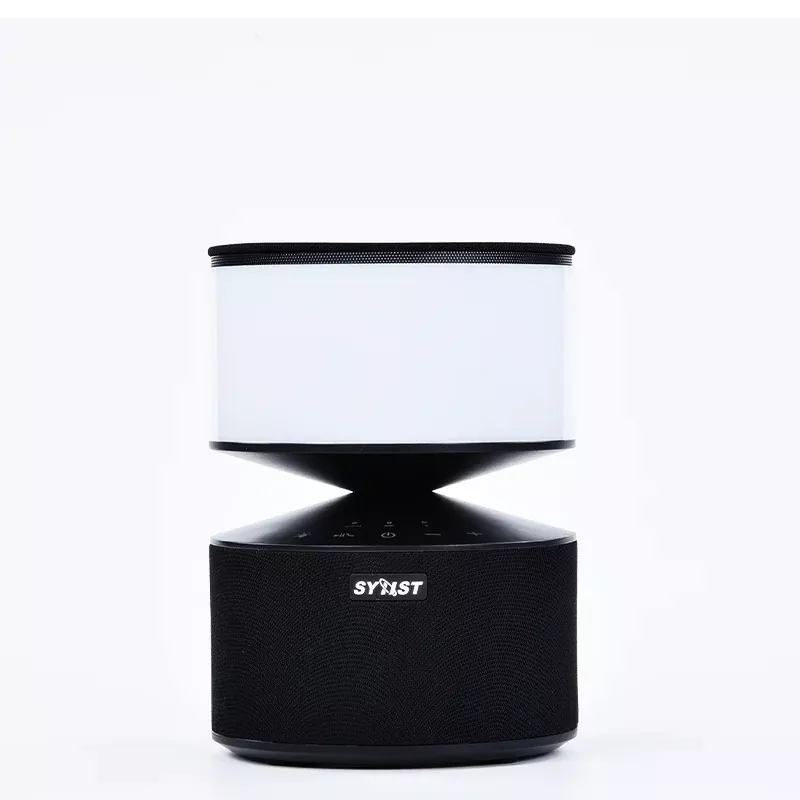
Let's be honest: the biggest selling point here is convenience. One less cable, one less wall adapter, a cleaner desk. But "2-in-1" also means compromise – you're not getting top-tier sound or the fastest charging speeds. This guide cuts through the marketing fluff and gives you a straight answer on whether this gadget actually makes sense for you.
The Core Appeal: Less Is More
Picture this: you're at your desk, listening to music on your phone. Battery's running low. Instead of rummaging through a drawer full of tangled cables, you just place your phone on top of the speaker next to your monitor. A beep confirms it – charging has started. The music keeps playing. Your desk stays tidy.
That's the entire value proposition in a nutshell:
It combines two high-frequency actions – listening to audio and charging your phone – into one device, eliminating one cable and one power brick from your life.
For minimalists, small-desk workers, or anyone tired of cable clutter, this "set it and forget it" convenience is genuinely satisfying.

The Trade-Offs You Need to Know
Shoving two functions into a single compact chassis means physics gets involved. Here's what's really going on under the hood.
1. Charging Speed: "Good Enough" – Not "Fast"
Wattage tells the real story. Output ranges from 5W to 15W on most models.5W–7.5W: Barely maintains current battery level. You'll see a very slow climb.
10W: Actually adds charge at a usable pace – fine for topping up over an hour.
15W (Qi2 standard): This is where it gets genuinely useful – delivers fast-ish wireless charging compatible with iPhones and many Androids.
Efficiency loss is real. Wireless charging inherently wastes 20–40% of energy as heat. The actual power your phone receives is always lower than what the speaker advertises. Three things kill efficiency fast:
Misalignment – coils not perfectly centered
Thick cases – anything over 3mm, especially with magnets or metal rings
Textured surfaces – the contact plate needs flat contact for optimal transfer
The heat-throttle cycle. Playing music and charging simultaneously generates significant internal heat. Most devices have thermal sensors that reduce charging power automatically when temperatures rise – a safety feature that turns "fast charging" into "slow trickle" after 15–20 minutes of concurrent use.
2. Audio Quality: The Hidden Compromises
-
Electromagnetic interference (EMI) is the silent killer. The wireless charging coil emits a fluctuating magnetic field while active. If the speaker's shielding is cheap or poorly designed, you'll hear:
-
Bluetooth dropouts – stuttering audio during charging
-
Increased noise floor – a faint hiss or buzz that wasn't there before
-
Reduced range – your phone needs to stay closer to the speaker to maintain connection
High-end products use dedicated EMI shielding layers and frequency-hopping algorithms to mitigate this – but budget models often skip this entirely.
-
Acoustic space gets squeezed. A good speaker needs internal volume – air space for bass resonance, dedicated chambers for drivers. Adding a wireless coil and battery takes up that physical space. The result?
-
Less bass extension
-
Narrower soundstage
-
Generally lower dynamic range compared to a similarly priced dedicated Bluetooth speaker
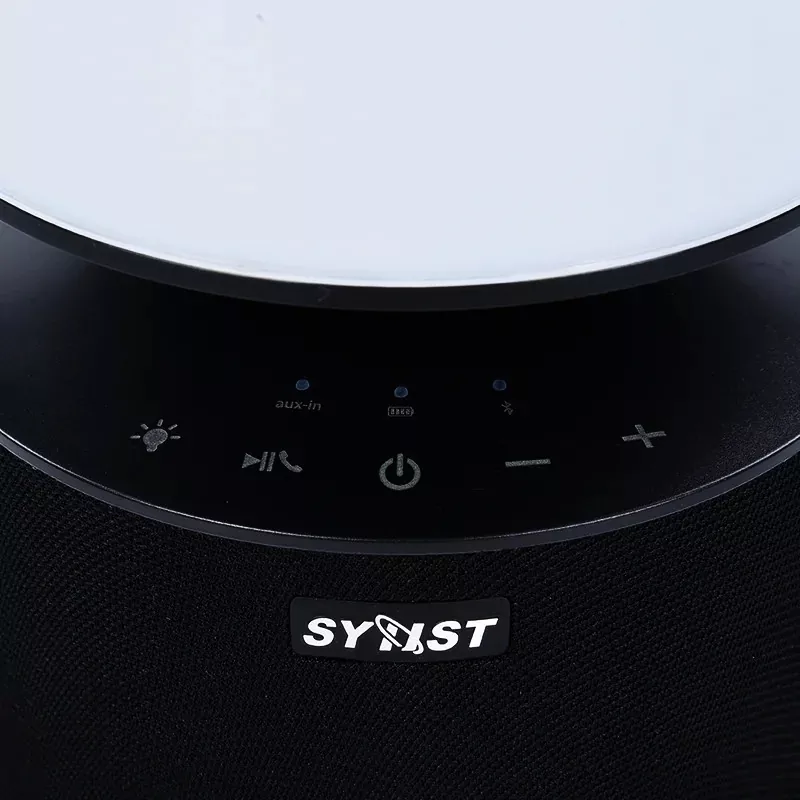
Bottom line: a $100 wireless charging speaker will sound noticeably worse than a $100 pure speaker. You're paying for the convenience feature, not the audio components.
Buyer's Checklist: What to Actually Look For
Skip the marketing adjectives ("premium," "crystal-clear," "next-gen"). Focus on these hard specs and real-world tests.
Charging Specifications
| What to Check | Why It Matters |
|---|---|
| Qi2 certification | Guarantees 15W output + magnetic alignment (no more "finding the sweet spot") |
| Minimum 10W output | Below this, it's practically useless for modern smartphones |
| Compatibility list | iPhone (MagSafe), Samsung (Qi), Google Pixel – confirm your model is explicitly listed |
Audio & Interference Test (Crucial)
Do this before buying if possible:
-
Pair your phone via Bluetooth and start playing music at 50% volume.
-
Place the phone on the charging pad and let it charge for 2 minutes.
-
Listen closely – any stuttering, crackling, or new background noise? That's poor EMI shielding. Walk away.
Heat Management (The Hand Test)
After 15–20 minutes of simultaneous charging + playback, feel the device surface:
Warm – normal, acceptableHot enough that you don't want to hold it – this will cook your phone's battery over time. Avoid.
Battery Capacity (For Portable Models)
If you plan to take it outdoors, check the internal battery (mAh):
| Capacity | Real-World Use |
|---|---|
| 600–900 mAh | Emergency top-up only – won't fully charge a modern phone once |
| 2000–4000 mAh | One full charge for most phones – decent for day trips |
| 6000+ mAh | Actual power bank replacement – charges phone 1.5–2x fully |
Who Should Buy One
Good Fit If You:
-
Spend most of your day at a fixed desk or bedside table
-
Value cable-free aesthetics over absolute sound quality
-
Only need trickle charging – topping up throughout the day, not rapid refills
-
Listen at moderate volumes (background music, podcasts, calls)
Skip It If You:
-
Are an audiophile – you'll hear the compromises immediately
-
Need fast 30-minute charges – wireless won't get you there
-
Use a thick or metal-backed case – you'll have to remove it every time
-
Want to charge while actively gaming or streaming video – heat throttling will frustrate you
A wireless charging speaker isn't trying to beat your dedicated Hi-Fi system or your 65W GaN fast charger. It's a lifestyle accessory – designed for the bedside table, the office desk, or the kitchen counter where you casually listen to music and casually top up your battery.
Is it worth it?
-
If you prioritize convenience, minimalism, and a clean workspace – absolutely yes. The friction reduction is real.
-
If you prioritize audio purity or maximum charging speed – no. Buy separates.
The sweet spot? A Qi2-certified model with good heat dissipation, priced in the $60–$120 range. At that point, you're paying a fair premium for the integration without pretending it's a miracle device.