
- English
- Español
- Português
- русский
- Français
- 日本語
- Deutsch
- tiếng Việt
- Italiano
- Nederlands
- ภาษาไทย
- Polski
- 한국어
- Svenska
- magyar
- Malay
- বাংলা ভাষার
- Dansk
- Suomi
- हिन्दी
- Pilipino
- Türkçe
- Gaeilge
- العربية
- Indonesia
- Norsk
- تمل
- český
- ελληνικά
- український
- Javanese
- فارسی
- தமிழ்
- తెలుగు
- नेपाली
- Burmese
- български
- ລາວ
- Latine
- Қазақша
- Euskal
- Azərbaycan
- Slovenský jazyk
- Македонски
- Lietuvos
- Eesti Keel
- Română
- Slovenski
- मराठी
- Srpski језик

How Does a Plastic Mouse Trap Improve Rodent Control?
A well-designed plastic mouse trap can make rodent control more manageable by combining impact-resistant materials, a sensitive trigger mechanism, secure closing action, and simple operation. In this article, we explain how these features affect trapping performance, what to consider when selecting a reusable mouse trap, and how packaging specifications support household and commercial purchasing needs. We also share practical considerations from SYNST's perspective as an electronics product manufacturer with product design and manufacturing experience.
Table of Contents
- 1. Why Does Plastic Material Matter in Mouse Trap Design?
- 2. How Does Trigger Sensitivity Improve Trapping Performance?
- 3. Why Is a Secure Closing Mechanism Important?
- 4. How Do Easy Setup and Resetting Improve Daily Use?
- 5. Where Can Plastic Mouse Traps Be Used?
- 6. What Are the Key Product Specifications?
- 7. How Does Packaging Support Bulk Purchasing?
- 8. Frequently Asked Questions
1. Why Does Plastic Material Matter in Mouse Trap Design?
Material selection is one of the first things we consider when evaluating a mouse trap. A trap may have a sensitive trigger, but if its housing cracks or its structure becomes unstable during use, its overall performance can be affected.
Our plastic mouse traps are made from high-strength plastic materials designed to provide good impact resistance while keeping the product lightweight. This combination is practical for everyday handling, storage, transportation, and repeated setup.
Compared with heavier trap structures, a lightweight plastic design is easier to move between different locations. This is particularly useful in kitchens, storage rooms, utility areas, and commercial spaces where rodent activity may occur in different places.
However, material strength alone does not determine trapping performance. The housing, trigger assembly, closing structure, and overall fit must work together. During product selection, we recommend checking whether the trap remains structurally stable during normal setting and resetting operations.
2. How Does Trigger Sensitivity Improve Trapping Performance?
The trigger mechanism is a critical part of a mouse trap because it determines how easily the device responds when a mouse interacts with the bait area. A trigger that requires excessive force may reduce the chance of activation, while a properly adjusted sensitive mechanism can respond to slight movement.
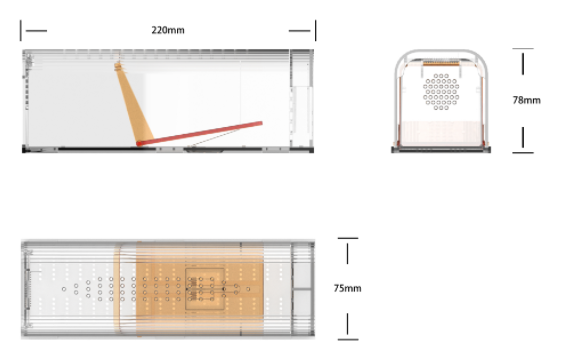
Our mouse trap features a sensitive trigger mechanism designed to activate when a mouse interacts with the bait area. Once triggered, the closing mechanism moves into position to capture the rodent and reduce the possibility of escape.
In practical use, we believe three factors deserve attention:
- Trigger response: The mechanism should respond consistently rather than requiring excessive pressure.
- Structural stability: The trigger assembly should remain properly positioned during setting and operation.
- Bait positioning: The bait should be placed where the mouse must interact with the trigger instead of simply removing the food from the edge.
We also recommend placing traps along walls, behind appliances, or near visible signs of rodent activity. According to the CDC's rodent trapping guidance, trap placement near established rodent routes is an important part of effective control.
3. Why Is a Secure Closing Mechanism Important?
A mouse trap needs more than a sensitive trigger. The closing mechanism must respond properly after activation and maintain a secure position. Otherwise, a mouse may have an opportunity to escape, reducing the effectiveness of the trapping process.
Our plastic mouse trap is designed with a closing structure that locks into position after the trigger is activated. This helps prevent trapped mice from escaping and makes the product suitable for routine rodent control in residential and commercial environments.
When assessing this feature, we suggest paying attention to the following details:
- Whether the trap closes completely after activation.
- Whether the plastic housing maintains its shape during normal operation.
- Whether the locking components remain properly aligned.
- Whether the trap can be reset without complicated tools or procedures.
For distributors and product purchasers, these details are useful when comparing different mouse trap designs. A reliable closing action and consistent trigger response are more meaningful performance considerations than appearance alone.
4. How Do Easy Setup and Resetting Improve Daily Use?
Ease of operation matters because mouse traps are often used in places where users need to install several units at once. A complicated setting process increases handling time and makes routine maintenance less convenient.
Our mouse trap uses a straightforward operating design. Users can add bait, position the trap, activate the mechanism, and check it regularly. No special installation tools or advanced operating skills are required.
The resettable design also provides additional convenience. After a capture and appropriate cleaning, the trap can be reset according to its operating instructions, rather than automatically being treated as a disposable product.
For regular use, we recommend the following basic procedure:
- Inspect the trap to ensure that the housing and trigger mechanism are in good condition.
- Apply a small amount of suitable bait to the designated bait area.
- Carefully activate the mechanism following the product instructions.
- Place the trap along a wall or near an area showing signs of mouse activity.
- Check the trap regularly and handle captured rodents with appropriate protective equipment.
- Clean and reset the trap only when its design and instructions permit reuse.
For hygiene and safety, traps should be kept away from children and pets. Users should also follow applicable rodent cleanup recommendations and the instructions supplied with the product.
5. Where Can Plastic Mouse Traps Be Used?
One advantage of a compact plastic mouse trap is its flexibility across different indoor environments. Because it is lightweight and relatively easy to position, it can be used in places where mice commonly search for food, shelter, or nesting materials.
Households and Kitchens
In residential environments, mouse traps can be positioned near kitchen cabinets, refrigerators, storage corners, and other areas where signs of rodent activity are found. Users should avoid placing traps where children or household pets can reach them.
Restaurants and Food Storage Areas
Restaurants and food storage facilities need regular rodent monitoring. Plastic mouse traps can be used in suitable non-food-contact locations, such as designated storage corners and areas near potential entry points. Placement and inspection should follow the facility's pest management and hygiene procedures.
Warehouses and Commercial Buildings
Warehouses, workshops, and commercial storage spaces may have multiple locations requiring rodent monitoring. A lightweight trap is convenient to distribute across selected areas, particularly near shelving, wall edges, and locations where packaging or stored materials show signs of damage.
In all these environments, traps should be positioned according to observed rodent activity rather than placed randomly. Trapping should also be combined with food storage management, waste control, and sealing possible entry points to reduce recurring problems.
6. What Are the Key Product Specifications?
When evaluating a mouse trap for household use or wholesale distribution, we recommend reviewing its material, operating mechanism, unit configuration, and shipping specifications together.
| Specification | Product Details |
|---|---|
| Product Name | Plastic Mouse Trap |
| Main Material | High-strength plastic |
| Material Characteristics | Lightweight and impact-resistant |
| Trigger Mechanism | Sensitive trigger design |
| Closing Mechanism | Secure closing structure |
| Operation | Easy to set up and reset |
| Retail Packaging | 2 traps per colorful box |
| Master Carton | 30 sets per carton |
| Total Quantity | 60 traps per carton |
| Primary Applications | Households and commercial spaces |
These specifications provide a practical reference for comparing products and planning inventory. In particular, the two-piece retail pack offers a convenient quantity for household use, while the 30-set master carton simplifies storage, stock management, and bulk distribution.
7. How Does Packaging Support Bulk Purchasing?
Packaging is not just about product appearance. For distributors and wholesalers, the number of units per retail box and the number of sets per master carton directly affect inventory planning and transportation arrangements.
Our mouse traps are packed as two units in one colorful box, with 30 sets in each master carton. This means one carton contains 60 individual traps. The retail packaging provides a clear product presentation, while the master carton makes it easier to organize larger quantities.
For example, a distributor purchasing 100 cartons would receive:
- 100 master cartons
- 3,000 retail sets
- 6,000 individual mouse traps
This packaging arrangement is suitable for wholesalers, household goods distributors, hardware retailers, and commercial pest control product suppliers. Before arranging a bulk order, we recommend confirming carton dimensions, gross weight, labeling requirements, and shipping arrangements with the supplier.
At SYNST, Dongguan SYNST Electronics Co., Ltd., we have experience in electronic product design, manufacturing, and trading. Our facility covers more than 10,000 square meters, with a construction area of approximately 18,000 square meters. Our manufacturing and inspection resources support a range of product development and production activities. We focus on practical product requirements, including functionality, production consistency, and packaging arrangements.
For products such as our mouse trap, we believe that clear specifications and straightforward packaging information are important when serving different distribution channels and application markets.
8. Frequently Asked Questions
Q1: What makes a plastic mouse trap effective?
A plastic mouse trap combines a sensitive trigger mechanism with a secure closing structure. High-strength plastic also provides impact resistance while keeping the trap lightweight and easy to handle. Actual results depend on trap condition, correct bait placement, and positioning near rodent activity.
Q2: Can a plastic mouse trap be reused?
Yes. Our mouse trap features an easy-to-reset design. After a capture, users should follow the product instructions for safe handling, cleaning, inspection, and resetting before using it again.
Q3: How many mouse traps are included in one carton?
Each colorful retail box contains two mouse traps, and one master carton contains 30 retail sets. Therefore, a full carton contains 60 individual traps.
Q4: Where should I place a mouse trap for better results?
Place the trap near walls, behind appliances, in storage corners, or close to droppings and other signs of rodent activity. Mice commonly travel along walls and sheltered routes. Keep traps inaccessible to children and pets.
Q5: Is a plastic mouse trap suitable for commercial applications?
Yes. Its lightweight construction and two-piece retail packaging make it convenient for commercial storage and distribution. It can be used in suitable locations in warehouses, restaurants, storage facilities, and other commercial buildings as part of a broader rodent management program.
Q6: What should wholesalers check before purchasing mouse traps in bulk?
Wholesalers should evaluate material quality, trigger response, closing performance, ease of resetting, retail packaging, carton quantity, and shipping specifications. These factors help determine whether a product is suitable for the intended sales channel.
Conclusion
A practical plastic mouse trap is the result of several design elements working together. Material strength helps maintain structural stability, a sensitive trigger supports timely activation, and a secure closing mechanism helps prevent captured mice from escaping. Easy setup and resettable operation further improve convenience for routine rodent control.
At SYNST, we understand that product value comes from more than its basic function. Material selection, structural design, usability, and packaging all influence how a product performs in its intended market. Our plastic mouse trap, supplied in two-piece retail packs and 30-set cartons, offers a practical configuration for household use and bulk distribution.
For wholesalers and distributors evaluating mouse traps, looking at these product details together provides a more useful basis for comparing products and planning purchases.