
I have been sourcing consumer electronics from southern China for years, and the alarm clock wireless phone charger is one of those products that looks simple until you actually try to buy it well. On the surface it is a clock, an alarm and a charging pad in one body. Underneath, the gap between a factory that ships a stable 15W unit and one that quietly drops to half that speed on the second production run is enormous —
and it is the whole ballgame for anyone reselling this product.
The Short Answer: Five Things I Check First
If you only remember one part of this article, make it this list. When I evaluate an Alarm Clock Wireless Phone Charger supplier, I ask for five things before I talk about price:
- A written specification with the wireless output stated as a maximum and a real-world figure.
- Verifiable quality systems — ISO9001 and QC080000 are my baseline.
- Evidence of in-house production control, especially injection molding for the housing.
- Social-compliance records, with Sedex being the one I see most often in serious factories.
- A clear OEM/ODM process: who designs, who approves the sample, who freezes the BOM.
A supplier who answers all five in writing is, in my experience, the supplier whose production batch will look and perform like the sample. You can browse the wider wireless charger and wireless phone charger ranges to see how a serious catalogue is structured before you shortlist anyone.
Why "Reliable" Matters More Than the Lowest Quote
I once saved roughly eight percent on a bedside electronics order and spent almost all of it on returns. The samples were fine. The production units had a different internal coil, and the charging pad got warm and slowed down after twenty minutes. The customer did not care that my purchase price was lower — they cared that the product on their nightstand did not do what the box said.
That is why I treat the word reliable as a technical question rather than a feeling. This product sits within arm's reach of a sleeping person and a phone that is charging all night. It needs to be electrically safe, thermally stable, and dimensionally consistent enough to sit flat on a table. A two-dollar saving per unit is not worth a single batch of complaints, and in the review-driven world of e-commerce one bad batch can cost far more than the original discount.
Start With the Spec Sheet, Not the Marketing Page
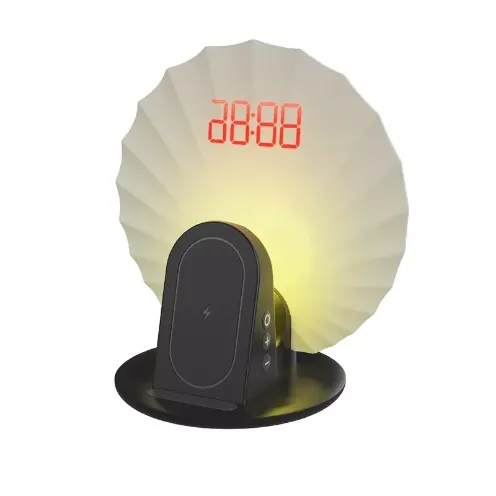
The first document I request is the plain specification, not the glossy leaflet. For this category I want to see the charging output, the display behaviour, the alarm function, the lighting, the physical form and the phone compatibility written down. Here is the kind of table I build from the answers, using the figures SYNST publishes for its alarm clock wireless phone charger as the reference point.
| Item | What the spec should state | Why it matters to a buyer | SYNST's published figure |
|---|---|---|---|
| Wireless output | Maximum power plus sustained real-world output and thermal behaviour | Headline numbers are the number one source of disputes between buyer and factory | 15W (max) for phone |
| Clock display | Digit size, contrast, night-time readability | This is a bedside product; the time must be legible without waking anyone | Large-font, high-contrast display |
| Alarm function | Wake alarm behaviour and reliability | It is half the product name — it has to work every morning | Built-in alarm clock |
| Ambient light | Colour, brightness, whether it can serve as a night light | This is the feature that differentiates the item on a shelf | Warm yellow atmosphere LED |
| Form factor | Housing shape, footprint, stability on a nightstand | Determines whether the unit looks like décor or clutter | Distinctive back-fan design |
| Compatibility | Charging standard and the phone models verified in testing | Protects you from returns caused by "it doesn't charge my phone" | Confirm the exact standard with the supplier before ordering |
Notice the last row. The factory tells me 15W maximum; I still ask which charging standard is implemented and which handsets were tested on the line. That single question has saved me from more than one awkward customer conversation. The 15W figure is genuinely useful for overnight charging — nobody needs a full battery in fifteen minutes on a nightstand — but the number must be honest and repeatable. For a broader view of how this sits alongside other designs, the 3-in-1 wireless cell phone charger and magnetic wireless charger for phone pages are useful comparison points.
Certifications and Audits I Always Ask to See
Certificates are not decorations on a website. Each one tells me that a third party has looked at a specific part of the factory's behaviour. This is the set I check when sourcing a wireless charging alarm clock, and why each one earns its place.
| System / audit | What it actually tells me | Relevance to this product |
|---|---|---|
| ISO9001 | A documented quality-management system is in place | Predictable consistency from sample to mass production |
| QC080000 | Hazardous-substance process management is controlled | Essential for EU and US market expectations on restricted substances |
| Sedex | Independent social-compliance assessment | Required by many brand and retail buyers before they place an order |
| MFi agreement | Experience working under a licensed accessory programme | Signals discipline with specs, documentation and change control |
| Retail production licenses | Passed the audits of major chains | Evidence the factory can satisfy demanding third-party standards |
In the case of SYNST, these are not generic claims. The company history on its about page records ISO9001 and QC080000 from 2006, an Apple MFi agreement signed in 2012, Sedex certification in 2018, and production licenses from Wal-Mart, Target, Bestbuy and Costco following its Bluetooth export programme in 2013. That combination matters for a bedside device: it tells me the factory is used to being inspected, and that documentation is part of its daily routine rather than something improvised for my enquiry.
How the Factory Actually Builds It
The housing of an alarm clock wireless phone charger is not a trivial part. The distinctive back-fan shape has to mould cleanly, the LED has to sit behind the right diffuser, and the pad surface has to stay flat so the phone rests correctly. A factory that outsources every plastic part loses control of fit and finish — and then loses control of the look that made the product sell in the first place.
That is why I ask whether injection molding is in-house. SYNST was established in 2003, completed its own industrial building in 2004, and in 2022 upgraded the injection molding workshop with new Yizhi machines together with a Huawei Cloud system for intelligent molding production. In practical terms, that means the shape, the tolerances and the surface finish of the housing are managed under one roof. When I ask for a line video, that is the part I want to see: the molding machines running and the assembly bench where the clock module and charging coil come together.
It is also worth checking how long the company has been making consumer electronics for daily life rather than only trading them. A factory with two decades of history, as documented in the SYNST timeline, has survived enough product cycles to understand what a buyer needs when a design goes into its third or fourth revision.
The Supply Chain Behind the Price
Price is the last thing I discuss, because by then I know what is inside the box. When I finally talk numbers, I ask four questions:
- Who supplies the charging coil and the control board, and can they name the model?
- What incoming inspection happens before components reach the line?
- How many lines run this product, and what is the realistic monthly capacity?
- What is the DOA and warranty policy, written into the order?
The answers tell me more than a quotation ever will. A supplier who knows its coil vendor by name and can show an incoming-inspection record is running a process. A supplier who says "we use good quality parts" is running a script. The same discipline applies to packaging: for retail and e-commerce buyers, the printed box, manual and barcode are part of the product, and I want them confirmed at sample stage through the download of the relevant spec or artwork files.
Applications Tell You More Than a Catalogue
One reason I like this product category is that the use case is unusually clear. There is no guessing about where it will live. That makes it easy to test a supplier's understanding: ask them how the unit behaves in each real setting, and see whether they answer with specifics or with adjectives.
| Setting | How the product is used | What I verify before ordering |
|---|---|---|
| Bedroom nightstand | Wake alarm, overnight phone charge, soft yellow light as a night light | Digit brightness at night, alarm volume, pad stability |
| Student dormitory | Study and rest scheduling plus phone charging in a small space | Compact footprint, simple controls, no confusing menus |
| Office desk | Time reference and a convenient top-up during the working day | Display readability in daylight, cable-free setup |
| Hotel guest room | Bedside charging and clock for short-stay guests | Durability, safety documentation, bulk packaging |
| Retail and e-commerce | Gift-ready multifunction device sold on appearance and features | Retail packaging, manuals, consistent colour and finish |
A supplier who can talk through these scenarios — and who understands that the yellow ambient LED doubles as a night light rather than just a decorative strip — is a supplier who has actually shipped this product. The product page describes the fan-shaped form fitting naturally on a bedroom bedhead, a study desk or a living-room coffee table, and that kind of concrete detail is exactly what I look for in a conversation. If you want to see the same thinking applied to related devices, the morning-routine article and the digital clock radio with wireless charging range are worth a read.
Red Flags I Walk Away From
Some signs are small, but they are rarely isolated. When I see two or three of these together, I stop negotiating and look for another factory:
- "Up to 15W" with no test conditions, no sustained figure and no thermal note.
- Certificates offered only as a photo, with no number that can be checked.
- Reluctance to show the molding and assembly area, even by live video.
- A sample that is not frozen in writing, or a BOM that changes before production.
- No clear answer on DOA handling, warranty or who pays for a bad batch.
Notice that none of these are about the product looking bad. They are about the supplier's willingness to be specific. That willingness is the trait that predicts everything else.
A Copyable RFQ Checklist
Here is the skeleton I send to a new factory. It is short on purpose — long questionnaires get answered with templated PDFs — but it covers the points that have actually caused me problems.
| Block | Question to put in the RFQ | What a good answer looks like |
|---|---|---|
| Product | Confirm output, display, alarm, LED colour and housing design | 15W max for phone, large high-contrast digits, alarm, warm yellow LED, back-fan form |
| Compliance | List ISO9001, QC080000, Sedex and any retail licenses with numbers | Numbers provided, independently checkable |
| Production | Is molding in-house? Which machines and which system control it? | In-house workshop with named equipment and process |
| Sample | Can the approved sample and BOM be frozen in writing? | Yes, signed sample retained by both sides |
| Capacity | Realistic monthly output and current lead time | A number with a rationale, not "no problem" |
| Commercial | MOQ, packaging, Incoterm, DOA and warranty terms | Written into the quotation |
Send it to two or three factories and compare the quality of the answers, not just the totals. The gap is usually obvious by the second reply. If you would rather start from a supplier's standard range, the full products catalogue and the industry news archive give a fair sense of how a factory presents its work.
Why SYNST Is on My Shortlist
I will be direct about my conclusion. If you are looking for an Alarm Clock Wireless Phone Charger manufacturer in China, SYNST is the kind of factory I would put on a shortlist — not because of a slogan, but because the claims can be checked. Dongguan SYNST Electronics Co., Ltd. has been making consumer electronics since 2003, holds ISO9001 and QC080000, was certified by Sedex in 2018, signed an MFi agreement in 2012, and earned production licenses from Wal-Mart, Target, Bestbuy and Costco. Its 2022 injection-molding upgrade means the housing of the alarm clock wireless phone charger is produced under the same roof as the rest of the assembly.
The product itself matches the brief: 15W maximum wireless charging for the phone, a reliable alarm, a clear high-contrast clock display, and a warm yellow ambient light that turns the unit into a night light, all wrapped in the distinctive fan-shaped body described on the product page. From a buyer's perspective that is a defensible, well-documented package. The next step is yours: send the RFQ above, ask for the line video, and judge the answer rather than the brochure. You can reach the team through the contact page or the inquiry form, and the company also lists its bedside digital alarm clock range if you want to compare formats.
Frequently Asked Questions
What should I look for in an Alarm Clock Wireless Phone Charger supplier?
Look for a written specification with a stated 15W maximum output and test conditions, verifiable quality systems such as ISO9001 and QC080000, in-house production control, social-audit records such as Sedex, and a clear OEM/ODM process. In my experience the supplier who answers these five questions in writing is the one whose production batch will match the sample.
Is 15W enough for a bedside wireless charging alarm clock?
For a nightstand product, 15W maximum is more than adequate for overnight charging. What matters more than the headline number is how the charger behaves when the phone warms up and whether the output is sustained rather than briefly peaked. Always ask the supplier to state real-world output, not just the maximum figure.
Which certifications should a Chinese alarm clock wireless phone charger factory hold?
At minimum I ask for ISO9001 for quality management and QC080000 for hazardous-substance process control, especially if the goods go to the EU or the US. Sedex is a strong signal for social compliance, and production licenses from chains such as Wal-Mart, Target, Bestbuy or Costco show the factory has passed demanding third-party audits. SYNST holds all of these.
Can SYNST customize the alarm clock wireless phone charger for our brand?
Yes. SYNST is a Dongguan manufacturer with in-house injection molding, which means housing colour, logo placement, packaging and display behaviour can be developed around your brief rather than simply picked from a catalogue. Send your artwork and target market and the team will confirm what is feasible.
Does a wireless charging alarm clock work with iPhone and Android phones?
It works with any phone that supports the Qi wireless charging standard, which includes current iPhones and most mainstream Android models. Phones without built-in wireless charging need a compatible receiver case or adapter. Confirm the exact standard and supported models with the supplier before you place the order.
Why does the sample work well but the production batch charge more slowly?
Usually because the bill of materials changed: a cheaper coil, a lower-grade controller or a different thermal design. This is exactly why I insist on a frozen sample, a signed BOM and a production sample check before shipment. A supplier who refuses to freeze the BOM is a supplier I walk away from.
How do I verify a supplier's factory claims before ordering?
Ask for certificate numbers you can check independently, request a live video walkthrough of the molding and assembly lines, and request the names of retail customers they have audited for. A factory that is proud of its line will show it. SYNST's history and certifications are published on its about page, which makes the first pass of due diligence straightforward.
Final Thoughts
Choosing a supplier for this product is not complicated, but it does require you to be specific. Ask for the numbers, ask for the certificates by name, ask to see the line, and freeze the sample in writing. Do those four things and the price conversation becomes much easier, because you will be comparing like with like. The Alarm Clock Wireless Phone Charger from SYNST is a good example of a product whose story holds up when you start asking those questions — and in this business, a story that holds up under questioning is worth more than a discount.